Tired of complex grating installation1s? Welding is often slow, expensive, or prohibited on-site. This can bring your project to a halt, creating frustrating delays and safety concerns.
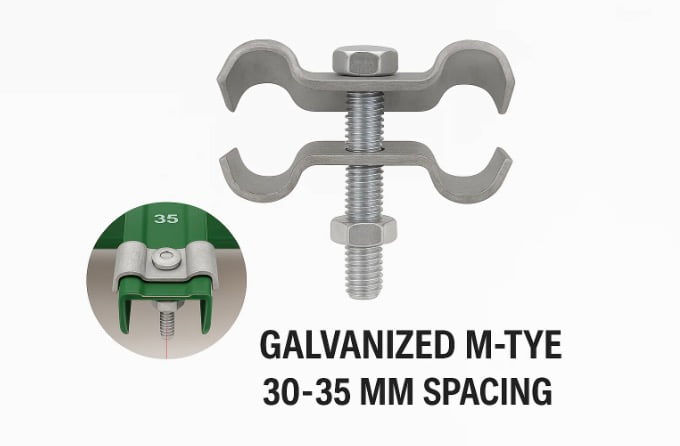
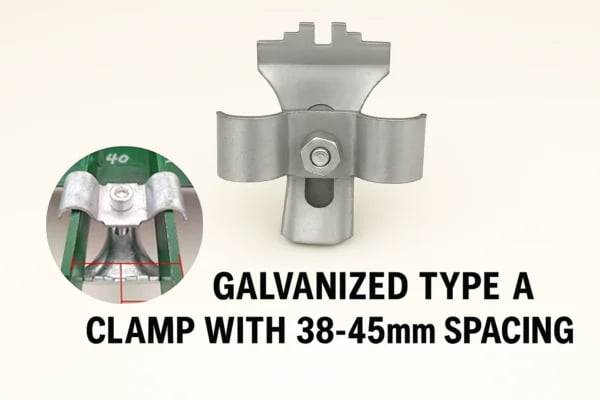
A saddle clip2, also known as an M-clip, is a mechanical fastener3 used to secure grating panels4 to a support structure. It's an M-shaped metal piece that sits over two grating bars and is fastened from the top, clamping the panel down without any welding.
I've been in the metal fabrication business for a long time, and I've seen how a small component like a grating clip can make or break a project's timeline. The choice between welding and mechanical fastening is a common one, but many people don't realize how effective a simple clip can be. To truly understand the value of saddle clip2s, we need to look at how they work, where they shine, and how they compare to other options available on the market. Let's dive into the details to see if they're the right fit for your next project.
How Do Saddle Clips Actually Work?
Looking at an M-shaped piece of metal, it's not obvious how it holds a heavy grating panel. Using it incorrectly could lead to unstable walkways and serious safety hazards5.
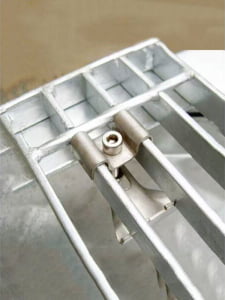
The saddle clip2's M-shape is designed to sit perfectly on top of two adjacent bearing bars of the grating. A fastener, like a self-drilling screw6, is inserted through the center hole and driven into the support beam below, creating a strong clamping force that holds the panel securely.
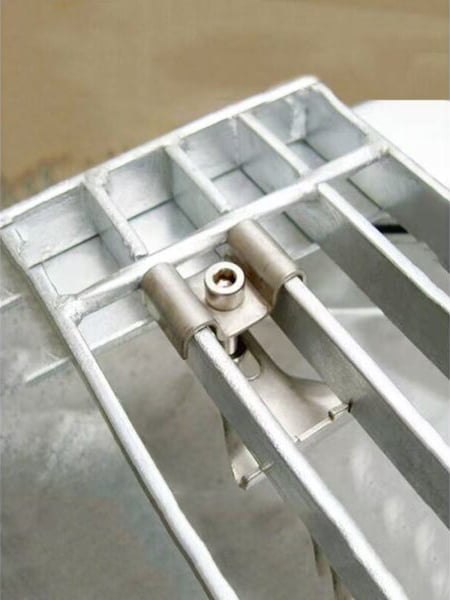
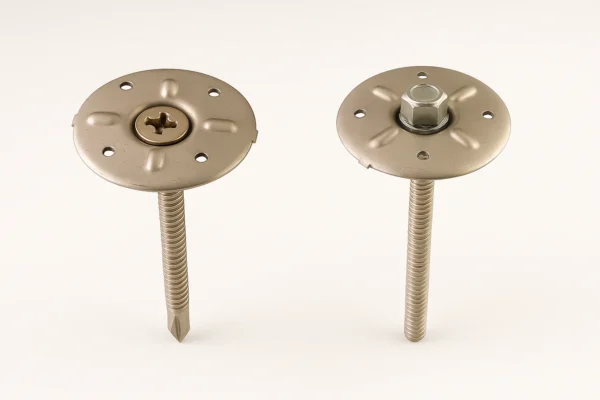
The beauty of the saddle clip2 is its simplicity. The installation happens entirely from the top surface, which is a huge advantage. You don't need access to the underside of the grating. The process is straightforward: you place the clip, and then you drive a fastener through it. The fastener is usually a 1/4" diameter self-drilling screw6 (often called a tek screw) or a bolt, which you'll typically need to purchase separately. As you tighten the fastener, the clip presses down on the grating's bearing bars, effectively locking the panel to the steel structure beneath it. We manufacture these clips from various materials like galvanized steel for general use, or 304/316 stainless steel for environments where corrosion is a major concern. This simple mechanical connection is surprisingly strong and reliable for many common applications.
What Are The Main Advantages of Using Saddle Clips?
Project delays and high costs are common challenges when installing grating. Welding requires special permits, skilled labor, and shutdowns, which can hurt your timeline and your budget.
The biggest advantage is that saddle clip2s eliminate the need for welding. This makes installation faster, safer in hazardous areas, and allows for easy removal of grating panels4 for maintenance or repositioning using only simple hand tools. They provide incredible flexibility for any project.
Let's break down these benefits. First, avoiding welding is a game-changer. In many industrial settings, like chemical plants or refineries, "hot work" like welding requires extensive safety precautions and permits, which can stop all other work in the area. Saddle clips completely bypass this issue. Second, the ease of installation and removal is a huge time-saver. I've seen installation teams secure large areas of grating in a fraction of the time it would take a welding crew. All you need is a drill. This also means that if you need to access pipes or equipment below the grating, you can simply unbolt a panel and lift it out. Try doing that with a welded panel. This versatility makes them a go-to choice for walkways, platforms, and maintenance areas where flexibility is key.
How Do Saddle Clips Compare to Other Grating Clips?
You see different fasteners called G-clips7, C-clips, and L-clips, and it can be confusing. Choosing the wrong clip can result in an insecure installation or just wasted money.
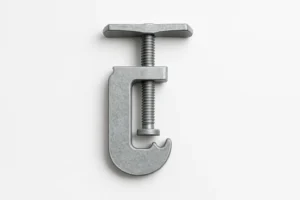
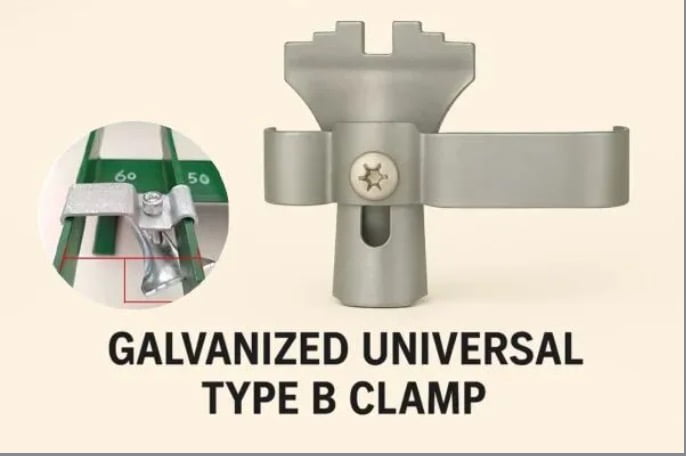
Saddle clips are designed to fasten grating from the top down to the support structure. Other clips serve different purposes: G-clips7 create a friction fit without drilling, C-clips join two panels together, and L-clips fasten a panel to the side of a support.
To make the right choice, you need to know what each clip is designed for. The best way I can explain this is with a simple table that breaks down the most common types we work with.
| Clip Type | Shape & Installation Method | Primary Use & Key Feature |
|---|---|---|
| Saddle Clip (M-Clip) | M-shaped; sits on top, bridging two grating bars. | General-purpose; attaches grating from the top surface to the structure below. |
| G-Clip | Custom shape; creates a friction connection from the top. | For flanges up to 0.75" thick; requires no drilling or welding into the support. |
| W-Clip (Washer Clip) | Washer-style; sits on top of plate grating. | Specifically for securing grating that has a solid top plate. |
| L-Clip (J-Clip) | L-shaped; fits over the side of a support bar. | For moderate loads; fastens grating to the side of a support structure. |
| C-Clip (End Panel Clip) | C-shaped; clamps onto the ends of two grating panels4. | Used to join two panel ends together, not to attach to the main structure. |
As you can see, the saddle clip2 is your reliable, all-around choice for standard top-down fastening. The other clips are specialists. Think of the saddle clip2 as the versatile workhorse of the grating fastener world.
What Are The Practical Guidelines for Using Saddle Clips?
You have the right clips, but you're not sure how to use them correctly. Improper spacing or using them in the wrong application can lead to a failed installation.
For a secure attachment, place saddle clip2s no more than 4 feet apart, which works out to about 4 clips per square meter. Always make sure the clip model you choose matches your grating's bearing bar spacing and depth for a proper, safe fit.
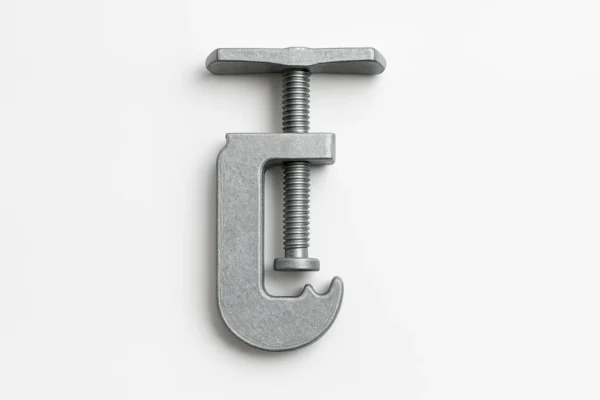
Following a few rules of thumb will ensure your installation is safe and secure. The 4-foot spacing guideline is crucial for preventing the grating from lifting or rattling under load. For compatibility, you need to check two things on your grating: the bearing bar spacing (the center-to-center distance between the main load-bearing bars) and the panel depth (e.g., 1", 1.5"). Our clips are designed for common spacings, so matching them is easy. However, it's critical to remember their limitations. Saddle clips are perfect for standard pedestrian areas, catwalks, and platforms. They are not recommended for areas with heavy-duty traffic8, such as forklifts or other vehicles. Those applications require a permanent attachment like welding to handle the dynamic loads. Always double-check that your hardware is right for the job.
Conclusion
In short, saddle clip2s are a versatile, easy-to-use solution for securing grating without welding. They are ideal for pedestrian areas and projects that require flexibility and quick installation.
Discover best practices to ensure safe and effective grating installations. ↩
Explore the benefits and applications of saddle clips in grating installations for efficient project management. ↩
Discover the advantages of mechanical fasteners over traditional welding methods in construction. ↩
Understand the different types of grating panels and their applications in various industries. ↩
Learn about potential safety hazards and how to mitigate them during installation. ↩
Find out how self-drilling screws enhance the efficiency of fastening systems. ↩
Compare G-clips with saddle clips to understand their specific uses and advantages. ↩
Explore fastening methods suitable for areas with heavy-duty traffic to ensure safety. ↩