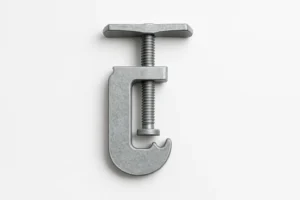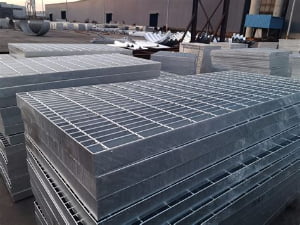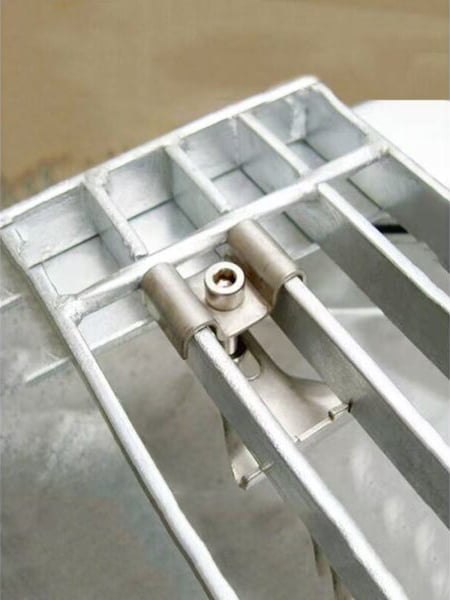
Choosing the wrong grating clip1 can lead to project delays2 or safety issues. A loose panel is a serious hazard, and a poor choice wastes valuable time and money on site.
The main types of grating clip1s include Type A3 for standard connections, Type B4 for joining panels, Type C5 for welded applications, and heavy-duty G-Clip6s for high-vibration areas. Specialized clips also exist for FRP grating7 and for anchoring directly to concrete, ensuring a secure fit for every situation.
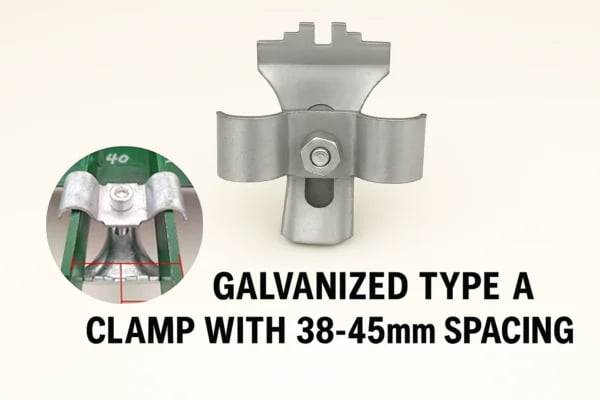
The world of fasteners8 can seem complex, but it's actually quite simple when you break it down. We deal with these clips every day, and I've learned that understanding the basic types is the key to getting your installation right the first time. Let's walk through each type so you can see exactly which one fits your project's needs and ensure a safe, secure, and efficient installation.
What are the most common grating clip1s for steel structures?
You need to fix steel grating to support beams, but you want to do it fast. Welding is slow and can be costly, while drilling holes in your beams can weaken them.
The most common clips are Type A3, B, and C. Type A3 attaches a single panel to a beam without drilling. Type B4 connects two adjacent panels to create a continuous surface. Type C5 is a lower-cost option that requires a bolt to be welded to the beam first.
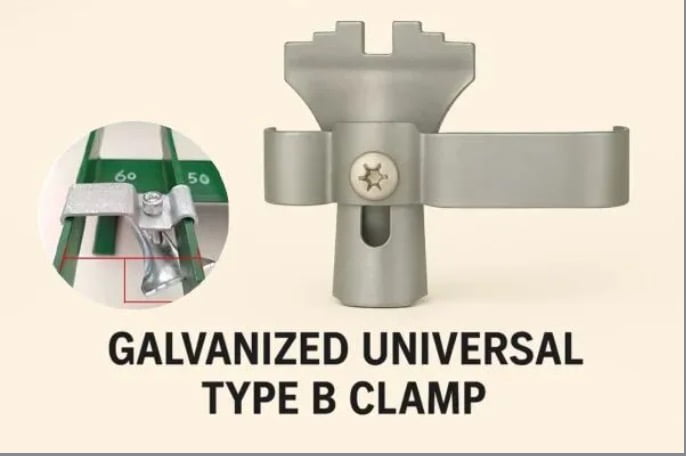
These three types are the workhorses of the grating industry. I see them on almost every standard platform, walkway, or mezzanine project. They are simple, effective, and designed to make installation as straightforward as possible. At our facility, we produce thousands of these every week, so I know them inside and out. Let's break down how each one works.
The A-B-C System of Grating Installation
Think of these three clips as a complete system for most standard applications. Each has a very specific job, and they often work together on the same project. They are almost always made from galvanized steel9 to provide good corrosion resistance10 in typical environments.
| Clip Type | Primary Use | Installation Method | Key Feature |
|---|---|---|---|
| Type A3 | Securing a single grating panel to a beam | Saddle clip clamps the beam flange | No drilling or welding required |
| Type B4 | Connecting two adjacent grating panels | Clamps the edges of two panels | Creates a seamless, unified surface |
| Type C5 | Securing a single grating panel to a beam | Lower part is welded to the beam | A cost-effective welding solution |
Type A3 is your go-to clip. It uses a saddle-like top piece that sits on the grating and a lower jaw that grips the underside of the steel beam's flange. A single bolt tightens them together, locking the panel in place. Type B4 is essential when you have long runs of grating. It acts as a bridge, clamping the bearing bars of two separate panels together to prevent them from moving independently. Type C5 is a bit different. It’s for projects where welding is permitted and cost is a major factor. You first weld the lower threaded stud to the beam, then place the grating over it, and finally secure it with the top saddle clip.
When do you need a heavy-duty grating clip1 like a G-Clip?
Are you worried about gratings shifting under heavy loads or constant vibration? Standard clips might not have enough clamping force for these demanding environments, which can create a serious safety risk.
You need a heavy-duty G-Clip6 in high-vibration areas, on structures with heavy moving loads, or anytime maximum clamping force is non-negotiable. Its robust, multi-part design provides a far superior grip on the support beam, preventing any movement and ensuring long-term stability.
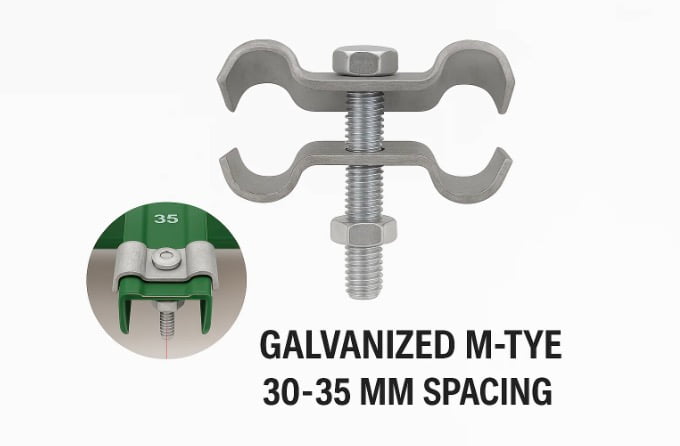
I've personally consulted on projects in power plants and on offshore rigs where vibration is a constant enemy. In those places, a standard clip just won't cut it; it can slowly work itself loose over time. This is where the G-Clip and similar heavy-duty designs become absolutely essential. They are engineered specifically to resist the forces that try to shake gratings loose, providing peace of mind that the walking surface will stay exactly where it's supposed to.
The Mechanics of Superior Clamping Force
The strength of the G-Clip comes from its unique, patented design, which usually consists of three parts: a top saddle piece, a specially shaped lower jaw, and a connecting bolt. Unlike a Type A3 clip that just pinches the beam flange, the G-Clip's lower jaw is designed to make more contact and apply force more effectively. This creates an incredibly strong mechanical lock11.
The materials used also reflect their heavy-duty purpose. While standard galvanized steel9 is common, we often manufacture these from more robust materials to meet specific project demands:
- Stainless Steel (304/316): The top choice for corrosive environments like chemical plants or coastal areas. It provides maximum strength and will not rust.
- Aluminum Alloy: Used when weight is a concern or when attaching aluminum grating, to prevent galvanic corrosion between dissimilar metals.
A critical detail is matching the bolt length to the grating's thickness. A bolt that is too short won't engage properly, and one that is too long could be a trip hazard. When a client comes to us for heavy-duty clips, this is one of the first questions we ask to ensure they get a product that is not only strong but also fits perfectly.
Are there special clips for non-steel gratings or concrete floors?
You're trying to install fiberglass (FRP) grating or fix a panel directly onto a concrete floor. Using a standard steel clip is a bad idea; it can cause corrosion or simply won't work at all.
Yes, absolutely. For FRP grating7, you must use specialized clips made from 304 or 316 stainless steel to prevent corrosion at the connection point. To fasten any type of grating to a concrete base, you should use disc-type clips12 that are anchored with concrete screws.
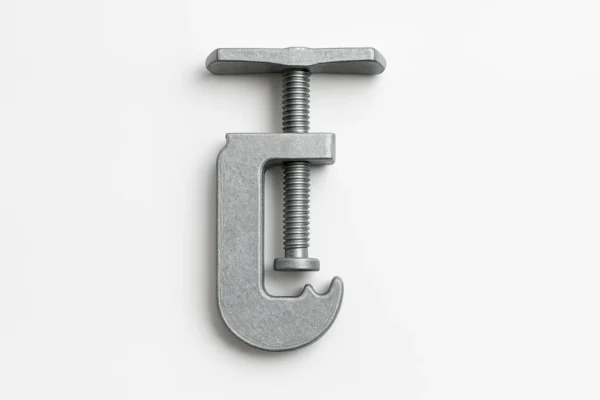
The material of your grating and your support structure are just as important as the loads and environment. We often get requests from customers working on projects at water treatment plants or in food processing facilities where metal grating isn't an option. They use FRP grating7 for its superior corrosion resistance10. Similarly, some designs call for grating to be laid directly on a concrete trench or floor. In both cases, a standard clip is the wrong tool for the job.
Matching the Clip to the Material
Using the right clip for these special cases is not just about a secure fit; it's about the long-term integrity of the entire installation.
Why FRP Grating Needs Stainless Steel Clips
Fiberglass Reinforced Plastic (FRP) grating is chemically inert and will not rust. If you use a standard galvanized steel9 clip to hold it down, you create a weak point. In a corrosive environment, that galvanized clip will rust away long before the grating shows any wear, causing the panel to come loose. To solve this, we manufacture FRP-specific clips from high-grade stainless steel (usually Type 316). These clips have the same corrosion-resistant properties as the grating itself, ensuring the connection point lasts as long as the walkway.
Anchoring to Concrete Bases
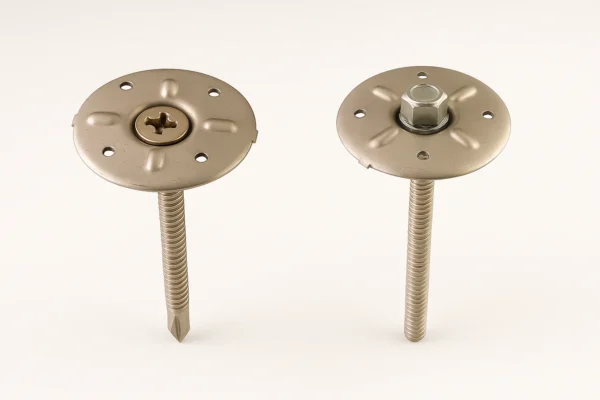
When you need to secure grating to a solid base like concrete, you can't use a clip that grabs a flange. Instead, you use a disc or washer-type fastener. This is a simple but effective system. It typically involves a flat or countersunk metal disc that provides a wide contact area on top of the grating's bearing bar. A hole in the center of the disc allows you to drive a concrete screw or a power-actuated nail directly into the substrate below, anchoring the panel firmly in place. This method is common for trench covers or for creating non-slip surfaces on concrete ramps.
How do you choose the right grating clip1 for your project?
With all these options, you might feel a bit overwhelmed and unsure which clip is truly the best fit. Making the wrong choice can lead to wasted money, project delays2, or even safety risks13 down the line.
To choose the right clip, just ask four simple questions. What are you connecting? How will you install it? What is the environment like? And what do safety rules require? Answering these will point you directly to the perfect clip for your job.
After years of helping customers, I've found that the selection process can be simplified by running through a quick checklist. This removes the guesswork and ensures all your bases are covered. And remember, sometimes a project is so unique that a standard clip just won't do. For those situations, we use our advanced laser cutting and stamping equipment to create fully custom clips14 based on customer drawings to solve very specific challenges.
Your 4-Point Grating Clip Selection Checklist
Before you place an order, walk through these four points. It will give you confidence that you are selecting the most effective, safe, and cost-efficient solution.
-
Connection Object: What exactly are you fastening?
- A single panel to a steel beam? You need Type A3.
- Two panels side-by-side? You need Type B4.
- FRP grating7? You must use FRP-specific stainless steel clips15.
-
Installation Method: What is allowed on your job site?
-
Environment and Load: What conditions will the clips face?
- A standard indoor platform? Standard galvanized Type A3/B/C clips are perfect.
- An area with heavy machinery or constant vibration? You must upgrade to heavy-duty G-Clip6s.
- A corrosive environment like a chemical plant or coastal area? You need stainless steel clips15.
-
Safety Regulations: What is the minimum requirement?
Conclusion
Choosing the right grating clip1 is crucial for safety, stability, and installation efficiency16. By considering your connection type, installation method17, and environment, you can confidently select the perfect clip for any project.
Understanding grating clips is essential for ensuring safety and efficiency in installations. ↩
Understand common pitfalls that can lead to delays in grating projects. ↩
Learn about Type A clips to ensure secure attachment of grating panels without drilling. ↩
Explore Type B clips for seamless connections between adjacent grating panels. ↩
Discover how Type C clips provide a cost-effective solution for welding applications. ↩
Find out why G-Clips are essential for high-vibration areas and heavy loads. ↩
Learn about FRP grating and the specialized clips needed for secure installation. ↩
Explore different fasteners and their roles in securing grating effectively. ↩
Explore why galvanized steel is commonly used for its corrosion resistance. ↩
Discover materials that enhance the longevity of grating clips in harsh environments. ↩
Understand how mechanical locks enhance the security of grating installations. ↩
Understand the effectiveness of disc-type clips for securing grating to concrete. ↩
Learn about the potential safety risks of using the wrong grating clips. ↩
Find out when custom clips are necessary for unique project requirements. ↩
Explore the advantages of stainless steel clips in corrosive environments. ↩
Discover tips for enhancing installation efficiency with the right clip choices. ↩
Learn about various installation methods to choose the right clip for your project. ↩