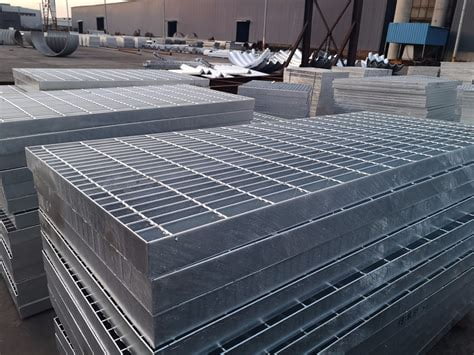
Struggling to choose the right metal for your grating? A wrong choice can lead to rust, failure, and costly replacements. Understand the key factors to make the perfect decision.
The best metal for grating depends on your specific needs. For general use with a tight budget, galvanized carbon steel1 is ideal. For corrosive environments2, choose stainless steel3. If weight is a primary concern, aluminum is the top choice. There is no single "best," only what's most suitable.
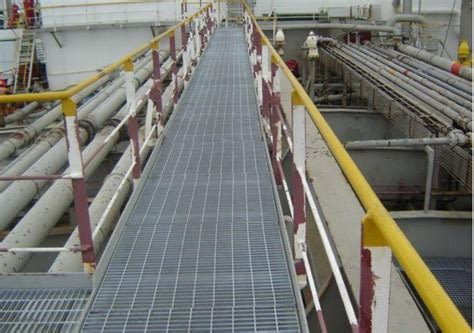
Choosing the right material for grating can feel overwhelming. You have to think about strength, rust, weight, and of course, price. In my years of working with metal, I've seen clients make choices that cost them a lot of money down the line. But I've also helped many find the perfect fit that lasts for decades. The secret is to stop looking for the one "best" metal and start looking for the "right" metal for your specific job. Let's break down the options so you can choose with confidence.
Is carbon steel a good choice for grating?
You need strong, reliable grating but are working with a limited budget. You worry that a cheaper option might rust quickly and fail. Hot-dip galvanized carbon steel1 provides a great solution.
Yes, hot-dip galvanized4d carbon steel](https://fixture-x.com/product/g-type-clips/)%%%FOOTNOTE_REF_1%%% is an excellent and popular choice for most grating applications. It offers high strength at a low cost. The zinc coating provides good rust protection5 for general industrial and outdoor environments, making it a very practical option.
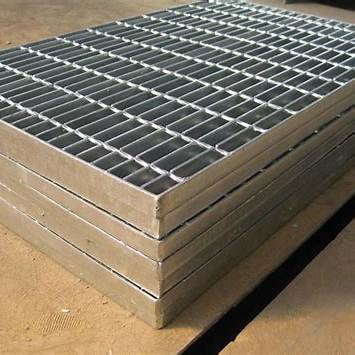
Carbon steel is the workhorse of the grating world for a reason. It's strong, tough, and affordable. On its own, carbon steel rusts easily. That's why we almost always use it after it has been hot-dip galvanized4. This process involves dipping the finished grating into a bath of molten zinc. The zinc creates a tough, protective layer that bonds directly to the steel. This coating is a fantastic defense against rust in most everyday situations, like on factory walkways, platforms, or outdoor stair treads.
However, you need to know its limits. The zinc coating is a sacrificial layer. In very harsh environments with a lot of salt spray (like near the ocean) or acidic chemicals (like in a chemical plant), the zinc will corrode away faster. Once the zinc is gone, the steel underneath will start to rust. So, while it's perfect for most jobs, it's not the right fit for every single one.
Carbon Steel: Strengths and Weaknesses
| Feature | Description |
|---|---|
| Strength | Very high strength and stiffness6. Can handle heavy loads, including vehicle traffic. |
| Cost | The lowest initial cost of the three main options, offering great value. |
| Corrosion Resistance | Good, thanks to the hot-dip galvanized4 coating. Suitable for most general outdoor and industrial areas. |
| Limitation | The zinc coating has a limited lifespan in highly corrosive or acidic environments. |
When should you use stainless steel3 for grating?
Your grating will be exposed to harsh chemicals, salt water, or strict hygiene standards. You can't afford the downtime or risk of rust and failure. Stainless steel offers ultimate protection.
You should use stainless steel3 in highly corrosive or sanitary environments. This includes chemical plants7, coastal docks, food processing facilities, and wastewater treatment plants. Its superior rust resistance ensures a long life with almost no maintenance, justifying the higher initial cost.
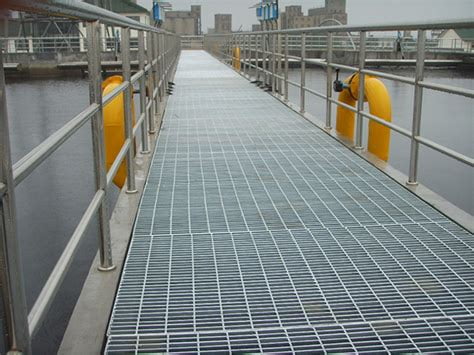
When you need grating that will absolutely, positively not rust, you turn to stainless steel3. Unlike galvanized steel, which relies on a surface coating, stainless steel3's corrosion resistance is part of the metal itself. This means even if it gets scratched or damaged, it won't start to rust. This makes it the champion for long-term durability in the toughest places.
There are two common types you'll hear about: 304 and 316.
- Type 304 is the general-purpose standard. It's perfect for food and beverage industries where hygiene and wash-downs are constant.
- Type 316 is a step up. It contains an element called molybdenum, which gives it extra power to fight off corrosion from chlorides, like salt and certain chemicals. This makes 316 the only real choice for coastal, marine, or swimming pool applications.
Yes, the upfront cost is significantly higher than carbon steel. But think about the total cost over the grating's life. With no need for replacement or re-coating, it often ends up being the more economical choice in the long run for these demanding applications.
Stainless Steel: 304 vs. 316
| Type | Best For | Key Feature |
|---|---|---|
| 304 Stainless | Food processing, pharmaceutical, general corrosive areas. | Excellent all-around corrosion resistance and hygiene. |
| 316 Stainless | Coastal/marine areas, chemical plants7, swimming pools. | Contains molybdenum for superior resistance to salt and chlorides. |
Why choose aluminum grating8 instead of steel?
You are designing a structure where weight is a major issue. You're worried that heavy steel grating will overload the frame or be too difficult to install. Lightweight aluminum is the answer.
Choose aluminum grating8 when low weight is your top priority. It is about one-third the weight of steel, which drastically reduces the structural load. It is perfect for movable platforms, ship decks, high-altitude walkways, and architectural applications9.
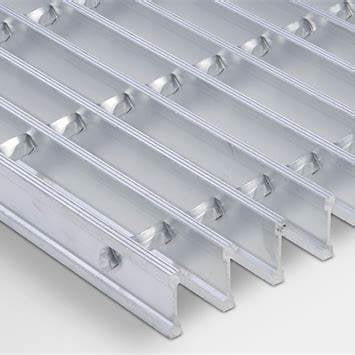
The biggest advantage of aluminum is clear: it's incredibly light. I remember a project on a historic building where we couldn't add much weight to the roof for a new walkway. Steel was out of the question. Aluminum grating was the perfect solution. It made the installation easier and safer for the crew, and it put very little stress on the old structure.
Besides being light, aluminum has its own natural defense against rust. When exposed to air, it forms a thin, hard layer of aluminum oxide on its surface. This layer protects the metal underneath from corroding further. It doesn't need any paint or galvanizing. This gives it a clean, modern look that many architects love for things like sunscreens or decorative facades.
However, you must respect its main limitation: strength. Aluminum is not as strong or as stiff as steel. It can handle pedestrian traffic just fine, but you would not use it in an area where heavy forklifts or trucks will be driving. It is a specialized material for applications where its low weight provides a benefit that outweighs its lower load capacity10.
Aluminum vs. Steel: A Quick Comparison
| Feature | Aluminum | Steel (Galvanized) |
|---|---|---|
| Weight | Very Light | Heavy |
| Strength | Moderate | Very High |
| Corrosion Resistance | Excellent (Natural) | Good (Coating) |
| Best Use Case | Weight-sensitive areas | Heavy-duty, high-load areas |
How do you choose the right metal for your project?
You know the options, but you're still not sure which one to pick. Making the wrong choice is an expensive mistake you want to avoid. A simple decision process can guide you.
To choose correctly, first analyze your environment for corrosive elements. Next, calculate the maximum load the grating must support. Finally, balance these performance needs with your initial budget and long-term maintenance costs11 to find the most effective solution.
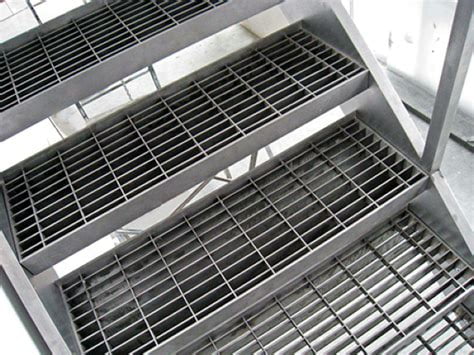
Making the final decision comes down to balancing three key factors. I always walk my clients through these three steps to make sure they get exactly what they need.
First, analyze the environment. Is it a dry, indoor warehouse? Hot-dip galvanized steel is perfect and cost-effective. Is it a platform on a chemical tank or a dock by the ocean? You must use stainless steel3, probably Type 316. Don't try to save money here; it will cost you more later.
Second, evaluate the load. Will the grating only be used for people walking? If so, you have more options, and even aluminum could work if weight is a concern. Will heavy carts, forklifts, or trucks be driving over it? You need the strength and stiffness6 of steel. There is no substitute.
Third, consider the budget. This isn't just about the initial price. Galvanized steel has the lowest upfront cost. Stainless steel has the highest. But if you put galvanized steel in a corrosive area where it will fail in 5 years, the cost of replacing it (material plus labor) will be much higher than if you had just installed stainless steel3 from the start. You have to think about the total lifecycle cost12.
Final Decision Matrix
| Factor | Galvanized Steel | Stainless Steel | Aluminum |
|---|---|---|---|
| Environment | General, low-corrosion | High-corrosion, sanitary | Moderate-corrosion, architectural |
| Load | Heavy (Vehicles) | Heavy (Vehicles) | Light (Pedestrians) |
| Cost | Low initial cost | High initial, low lifecycle cost | Medium initial cost |
Conclusion
There is no single "best" metal for grating. The right choice is a balance between your environment, load requirements, and budget. A careful decision ensures safety, longevity, and long-term value.
Explore the advantages of galvanized carbon steel, including cost-effectiveness and rust protection for various applications. ↩
Find out how different environments influence the selection of materials for grating applications. ↩
Learn why stainless steel is the go-to choice for durability and rust resistance in harsh conditions. ↩
Understand the hot-dip galvanization process and how it enhances the durability of steel against rust. ↩
Learn about effective rust protection methods to extend the life of metal grating in various conditions. ↩
Explore the significance of strength and stiffness in ensuring the safety and durability of grating. ↩
Learn about the best grating materials for chemical plants to ensure safety and compliance. ↩
Discover the benefits of lightweight aluminum grating for structures where weight is a critical factor. ↩
Discover how aluminum grating is used in modern architecture for its aesthetic and functional benefits. ↩
Learn how to assess load capacity to ensure safety and performance in grating applications. ↩
Understand how to evaluate maintenance costs to make informed decisions about grating materials. ↩
Discover the importance of total lifecycle cost in making sustainable and economical choices for grating. ↩
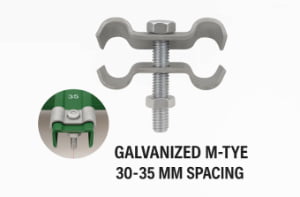
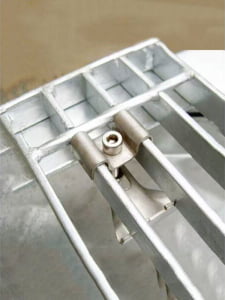
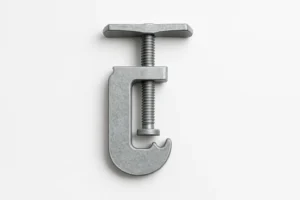
[…] saddle clip2, also known as an M-clip, is a mechanical fastener3 used to secure grating panels4 to a support structure. It's an M-shaped metal piece that sits over two grating bars and is […]